

Schoolsafe®
Integrated School Safety Assessment Program
Integrated assessment of the general safety conditions of educational establishments. A proprietary program of Lemonsafe®, not accredited by IPAC.

Integrated assessment of school safety
Schoolsafe® is Lemonsafe® 's own program dedicated to the integrated assessment of the overall physical, functional , and organizational safety conditions of educational establishments. Through observation of usage conditions and verification of documentary evidence, the program analyzes the criteria applicable to the safety of students, teachers, staff, and visitors. The methodology is tailored to the type, facilities, and activities of each establishment.
Proprietary integrated assessment program, not accredited by IPAC. Technical inspections of equipment and installations constitute autonomous services, accredited only when covered by Technical Annex I0104.

What is the Schoolsafe® assessment?
The program's criteria are verifiable, documented, and proportionate to the establishment. The evaluation focuses on existing conditions and available evidence, not on the design or implementation of corrective solutions.
The Schoolsafe® assessment is an in-house service not accredited by IPAC. It does not constitute certification, overall approval of the school, or a guarantee of the absence of risks. It does not replace technical equipment inspections, tests, regulatory audits, specialized verifications, maintenance, nor the legal responsibilities of the managing entity.
Advantages of the Schoolsafe® assessment
✓ Family trust
This demonstrates the school's attention to the safety of the school community.
✓ Risk prevention
It helps to identify hazards and shortcomings in the organization of security.
✓ Support for management
It provides objective information to define prevention and maintenance priorities.
✓ Integrated vision
It brings together the results from the applicable areas into a single report.
✓ Transparent communication
It allows you to communicate the assessment carried out and its limitations, without claiming certification.

Assessment Areas
The Schoolsafe® program is organized into 20 areas.
Click on each one to see what is evaluated.
01Governance, Policies, Conduct and Ethics
Safety and health policies, management responsibilities, code of conduct, data protection, and organization of internal procedures.
02Risk Management and Security
Evidence from risk assessment, verification planning, training, incident records, and follow-up on preventive actions.
03Buildings, Accessibility and Outdoor Spaces
General observation of floors, stairs, ramps, circulation areas and accessibility; maintenance records, incidents and applicable technical verifications.
04Security, Access Control and Protection of People
Organization of entrances and exits, visitors, service providers, keys, fences, intrusion protection, and authorized delivery and collection of minors.
05Teaching and Learning Spaces
General conditions for the use of classrooms, libraries, laboratories, workshops and auditoriums, furniture, safety rules and maintenance records.
06Sports Facilities and Equipment
Management of the use of fields, pavilions, stands, changing rooms and sports equipment; supervision, maintenance and inspection evidence.
07Swimming Pools and Water Activities
Access control and supervision, usage information, rescue organization, water quality records, maintenance and applicable inspections.
08Recreational Spaces and Equipment
Organization of playground use and supervision, maintenance records, incident reports, and documentation of equipment and surface inspections.
09Food Restoration and Safety
General conditions of kitchens and pantries, equipment and exhaust systems, maintenance records, HACCP, hygiene, preservation, temperatures, traceability, pests, allergens and drinking water.
10Electrical Installations and Equipment
General observation of operating conditions, access to panels, cables and sockets; maintenance records and documentation of applicable electrical checks.
11Indoor Air Quality, HVAC and Water
Ventilation, thermal comfort, HVAC maintenance, water networks, boilers and energy systems; evidence of quality control and Legionella prevention.
12Work Equipment, Maintenance and Contractors
Inventory, rules for the use of machinery, tools, ladders and PPE, work permits, management of service providers and evidence of maintenance and inspection.
13Chemicals and Hazardous Substances
Inventory, labeling, safety data sheets, storage and usage rules, spill response organization, and record keeping.
14Transportation, Vehicles and School Travel
Documentation for vehicles, drivers and insurance, organization of student transportation, boarding and disembarking, and procedures for study visits.
15Environment, Waste and Sustainability
Organization of waste collection and storage, including hazardous and laboratory waste; consumption records, environmental practices, and service provider management.
16Fire Safety and Emergency Response
Existence and management of fire detection and protection systems (FDS), safety records, training, drills, and maintenance documentation.
17Evacuation, Containment and Emergency Management
Organization of routes and exits, meeting points, responsibilities, support for people with reduced mobility, and evacuation and confinement procedures.
18First Aid, Health and Medical Emergency
Organization of first aid, training, support resources (including AED, when applicable), incident records and procedures for medical emergencies and severe allergies.
19Protection and Safeguarding of Children and Young People
Policies and procedures for preventing abuse, violence and bullying, digital protection, reporting of at-risk situations and reporting mechanisms, with respect for privacy.
20Safety in the face of extreme weather events
Safety in the face of extreme weather events and climate adaptation. Preparedness for heat, heavy rain, floods, strong winds and wildfires: official warnings, responsibilities, communication, community protection and drills.
In sports, aquatic, and recreational areas, no tests, normative measurements, or new conformity decisions regarding equipment are carried out within the scope of this program. Specific technical inspections remain independent services.
Explore the evaluated areas — hover your mouse over them or tap a circle.

See all areas in the illustration
How does the Schoolsafe® assessment work?

1. Application and scope
The responsible entity describes the space and the intended service.
Lemonsafe®, and limitations of the assessment.

2. Document preparation
The documents relevant to the applicable criteria are requested, without demanding documentation that does not exist for the typology.
For example, safety procedures, maintenance records, and technical reports.

3. Visit and verification
The evaluating technician observes the general conditions of use of the spaces and verifies the existing evidence.
The visit does not include standard tests or measurements.

4. Evaluation Report
Issuance of a non-accredited report, outlining scope, criteria, evidence, results, limitations, and a record of identified situations.
The client receives the complete documentation in digital format.
Frequently Asked Questions
-
No. It is a proprietary integrated assessment program from Lemonsafe®, not accredited by IPAC.
-
No. Mandatory or regulatory technical inspections, when applicable, remain independent.
-
No. The scope and criteria are tailored to the facilities, activities, and type of educational establishment; limitations are identified in the report.
-
No. When documentary evidence is required, adequate evidence from competent authorities is accepted.
-
A Schoolsafe® Assessment Report outlining the verified criteria, evidence, results, and limitations, without automatic labeling.
Schoolsafe® Assessment Report
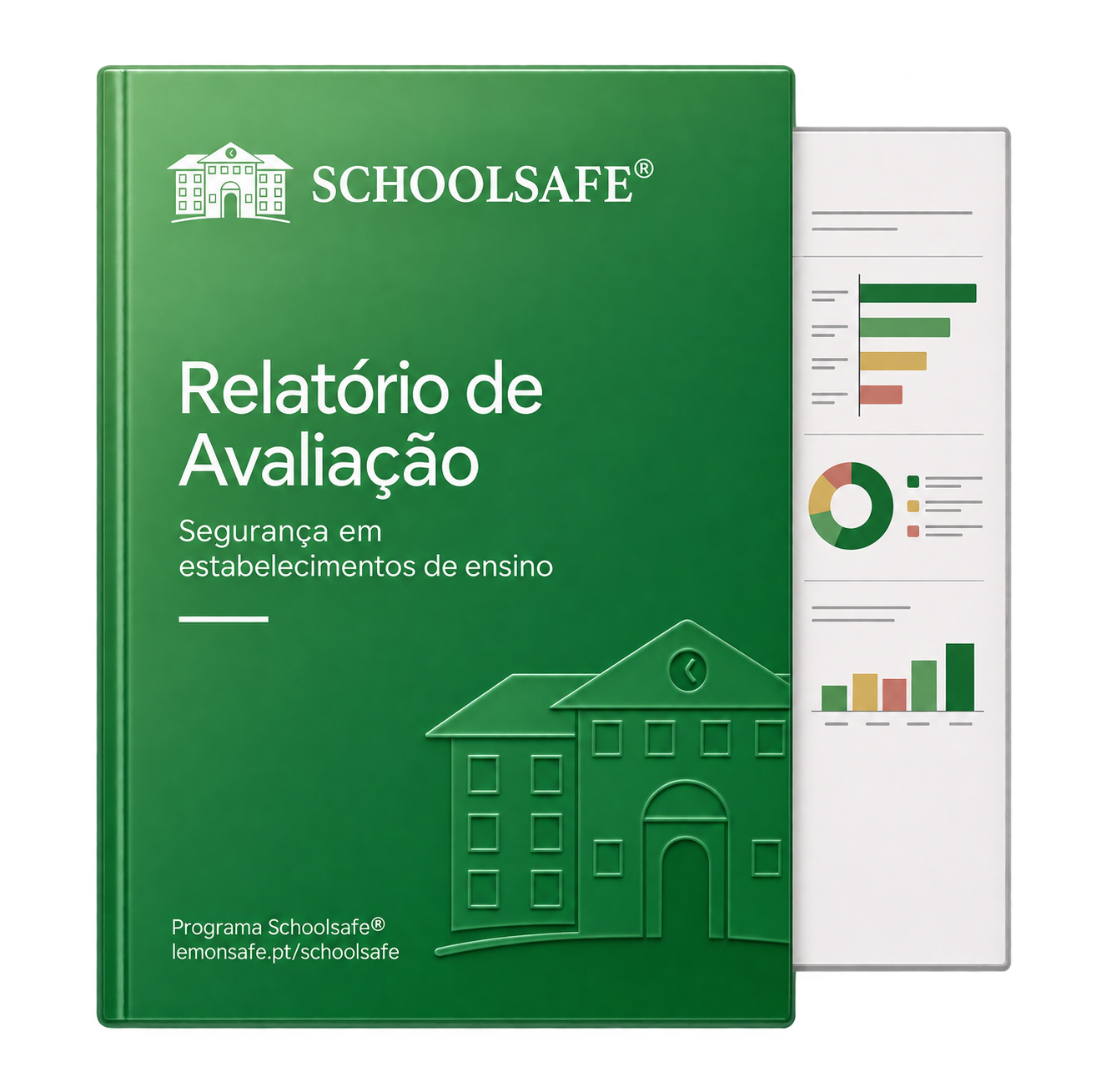
Each evaluation results in a Schoolsafe® Assessment Report, not accredited by IPAC. Any future recognition will depend on formal approval of the program regulations, including criteria, decision rules, scope, validity, complaints, suspension, and withdrawal.
Are you looking to assess the safety of your school?
Click the button below to request a Schoolsafe® assessment. No personal student information is required.
Get a free quote
We will be brief in your return.